
Sunscreen is the single most useful product in any skincare routine. It helps prevent tanning, dark spots, uneven tone and early ageing, and it's what lets every other active you use actually show results. But walk down any skincare aisle and you'll be asked to choose: mineral or chemical?
Here's the difference between them, what to look for on the label, and how to choose one that suits Indian skin and an Indian climate.
What sunscreen protects you from
Sunlight contains two types of ultraviolet radiation that matter for your skin:
- UVB causes sunburn and surface damage. SPF measures protection against UVB.
- UVA goes deeper. It's the main driver of tanning, pigmentation and collagen breakdown, and it passes through clouds and windows. The PA rating (PA+ to PA++++) measures protection against UVA.
For melanin-rich skin, UVA protection is especially important, because tanning and pigmentation are usually the bigger concern than burning. Many people with darker skin rarely burn but tan and develop dark patches easily. So don't stop at the SPF number. Check the PA rating too.
Mineral sunscreen
Mineral (also called physical) sunscreens use zinc oxide and/or titanium dioxide. These particles sit on the surface of your skin and protect it by absorbing and scattering UV before it can do damage.
The advantages:
- Gentle. They're much less likely to sting or irritate, which makes them a good choice for sensitive, acne-prone or reactive skin, and for skin that's using actives.
- Zinc oxide covers a broad range, protecting against both UVB and the long-wave UVA that's linked to pigmentation.
- They work straight away. There's no waiting period after you apply.
The traditional drawback: older mineral sunscreens were thick and left a white or grey cast, which is especially noticeable on medium and deeper skin tones. Modern formulas use finer particles and better textures, so a mineral sunscreen no longer has to look chalky.
Chemical sunscreen
Chemical (or organic) sunscreens use filters such as avobenzone, octocrylene and newer molecules like Tinosorb. They absorb UV radiation and release it as a small amount of heat.
The advantages:
- Lightweight and invisible. They're easy to make into thin, clear textures that disappear on any skin tone.
- They spread easily, which can make it easier to apply enough.
The drawbacks:
- Some filters can sting the eyes or irritate sensitive skin.
- Certain older filters break down in sunlight unless they're stabilised, so formulation quality matters.
- Some people with acne-prone or rosacea-prone skin find they react to them.
Many sunscreens today are hybrids that combine mineral and chemical filters to balance protection and texture.
So which is better for Indian skin?
The honest answer: the best sunscreen is the one you'll wear every day, in the right amount. Both types protect well when they're well formulated. That said, here's how to decide:
Choose mineral if you:
- Have sensitive, reactive or acne-prone skin
- Are using actives such as exfoliating acids, retinoids or pigmentation treatments
- Are managing melasma or dark spots and want broad UVA coverage
- Find that sunscreens make your eyes sting
Chemical or hybrid may suit you if you:
- Have resilient skin that doesn't react easily
- Strongly prefer a completely clear finish and haven't found a mineral formula you like
For India's heat and humidity, texture matters as much as filter type. Look for a lightweight, non-comedogenic formula that doesn't feel greasy, so you'll actually reapply it.
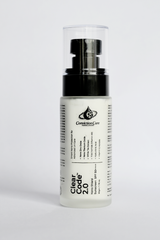
We chose a mineral base for our Nano Shield SPF 50 because it's built for skin that's also using actives. It's broad-spectrum (SPF 50, PA++++), includes niacinamide, and is formulated to go on without a white cast.
What to look for on the label
- SPF 30 minimum, SPF 50 ideally. SPF 50 blocks around 98% of UVB.
- PA+++ or PA++++ for strong UVA protection.
- "Broad spectrum", meaning it covers both UVA and UVB.
- "Non-comedogenic" if you're prone to breakouts.
- Water resistance if you'll be swimming or sweating heavily, but reapply anyway.
How to apply it properly
Most people apply a third to half of the amount used in lab testing, which means they get far less protection than the number on the bottle.
- Use enough: about two finger-lengths for your face and neck.
- Apply it as the last step of your morning routine, before makeup.
- Don't forget the ears, the back of the neck, the hairline and around the eyes.
- Reapply every 2–3 hours when you're outdoors, and after sweating, swimming or wiping your face.
- Wear it every day, including on cloudy days, during monsoon and indoors near windows. UVA passes through clouds and glass.
Common sunscreen myths
- "Darker skin doesn't need sunscreen." Melanin offers some natural protection, but not enough to prevent tanning, pigmentation, melasma or sun damage.
- "My makeup has SPF, so I'm covered." You'd need to wear far more foundation than anyone does to get the SPF on the label. Use a dedicated sunscreen underneath.
- "I'm indoors all day." If you sit near a window or step out during the day, UVA still reaches you.
- "Sunscreen causes breakouts." Heavy, greasy ones can. A lightweight, non-comedogenic formula shouldn't, and skipping sunscreen makes post-acne marks last longer.
The bottom line
Mineral and chemical sunscreens both work. Mineral formulas are gentler and a strong choice for sensitive, acne-prone or pigmentation-prone skin; chemical formulas are usually lighter and clearer. Whichever you pick, choose SPF 50 with a high PA rating, use enough, and reapply. Consistency matters far more than which type you choose.